
Funded Community Action Projects
Community Action Projects are designed to bring together individuals, organizations, and researchers to build more resilient and connected communities. We fund projects that facilitate community-based learning opportunities, build resilient networks, expand agricultural conservation practices, enhance environmental monitoring infrastructure, and more. Read about some of our funded projects below. Reach out to Sarah Helmer (Sarah-helmer@uiowa.edu) or Brandi Janssen (brandi-janssen@uiowa.edu) with questions or to start planning a project.
Agricultural Conservation
Title: Stories of the Seasons for Resilience: Climate Change and Women in Iowa Agriculture
Abstract: This project gathers a cohort of 15 women who steward Iowa land to compile their existing knowledge of the phenological relationships they use to guide agricultural decision making. They will leverage their collective expertise and work with researchers to develop action projects to make their land more resilient. The cohort will meet over a year as a multi-session learning circle, using storytelling around seasonality and exploring reciprocities among the human and natural worlds. As a culmination of this collaborative program, the women will create a visual artifact that represents a sampling of these relationships that they value—and need to pay attention to—as they work to adapt both socially and environmentally to a changing climate. This artifact will present stories, ecological expertise, data, and art that can help guide other Iowa land stewards toward greater climate resilience.
Title: Resilience in Central Iowa through the Butterfly Effect; Engaging new women in conservation through shared stories and social circles
Abstract: This project will develop and apply two methods of outreach that leverage women’s social-circle connections and that address the communicative and economic barriers they experience in making conservation changes. The first method is purposeful gatherings of women who never come to agricultural or conservation meetings. For these events, women will be identified and personally invited by Tamara Deal, her leadership committee, and other women landowners using the personal relationships of trusted social networks. The primary focus of these events is engaging women landowners/influencers in new conversations about agriculture at a socially acceptable forum. The second method engages women who attended a larger event to attend small-group coffee conversations around focused topics, such as crop diversification; cover crops; and negotiation with tenants and others in their decision-making circle.
Title: Using GIS-based maps to assist landowners in taking conservation action
Abstract: This project creates and implements storytelling programming that integrates a GIS-based tool, Agricultural Conservation Planning Framework (ACPF) to support landowners in adopting conservation practices. The ACPF provides maps that chart the history, current conditions, and future possibilities of agricultural land that enhance decision making. This project will foster conservation projects with landowners in Iowa, build relationships with additional collaborators, and create the programming infrastructure to extend this work to elsewhere in the CM region.
Title: Neighbors to networks: Outreach to landowner-supporting partners
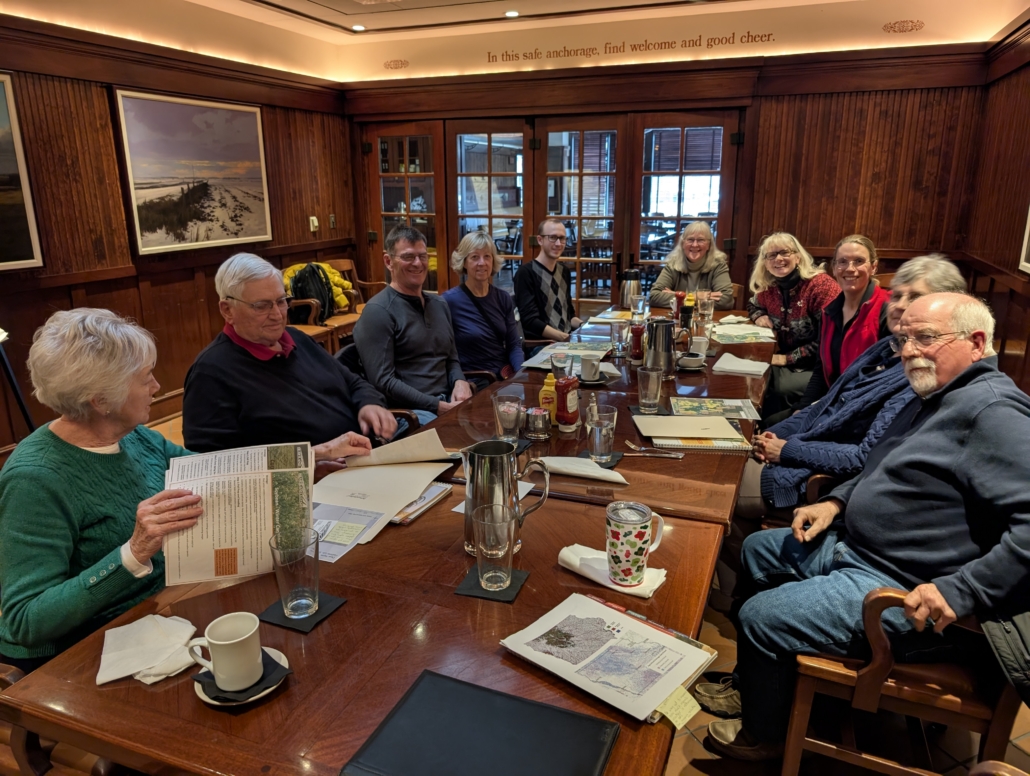
Abstract: We are a committee who has organized to offer programming for landowners and influencers in our Raccoon River Watershed through a collaborative partnership with COLEARN partners and agricultural organizations. This proposal now takes the next step in offering more programming for this local community to begin sharing the initial successes and methodology of this work with new partners in the region.
Title: Building relationships for conservation action through the COLEARN’s ACPF work
Abstract: This project will fund a beginning collaboration between Iowa Valley RC&D and the ACPF team of researchers on the COLEARN project. Funding will support a pilot ACPF session with one of our constituent landowners in Johnson County in the Clear Creek-Iowa River watershed. The goal of this session is to implement more common sense conservation practices on the landscape given the unique natural features and topography of this site and to begin a relationship among Iowa Valley RC&D, the landowner, and the COLEARN team.
Title: COLEARNING with landowners through ACPF
Abstract: This project will identify landowners that would benefit from a facilitated ACPF session and connect them with stipend support for taking action on their land to protect water and soil resources. Building on WFAN-led workshops in the Cedar Rapids Watershed, candidates will be recruited and screened for an individual ACPF session. During these facilitated sessions, COLEARN team members collaborate with participants, using storytelling-based questions that explore the participants’ personal land stewardship goals as well as their observations and concerns related to weather patterns. By integrating these goals and concerns with the ACPF output, landowners will be equipped to use the stipend support to take weather-wise action on their land. The primary outcome of these sessions will be landowners taking informed action on their farmland to protect and improve their soil and water quality. The secondary outcome will be COLEARN researchers gaining qualitative weather observations and feedback on the ACPF facilitated session process. The weather behavior deemed important by the landowners can assist efforts to blend impactful weather information into ACPF processes.
Environmental Monitoring
Title: Sovereign Nation Enhanced Environmental Monitoring and Data Sharing
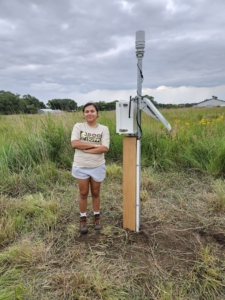
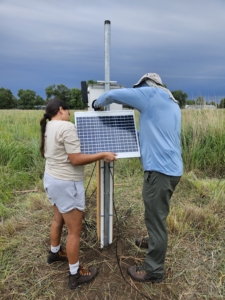
Abstract: Agencies specific to the Santee Sioux Nation and the Sac & Fox Nation of Missouri in Kansas and Nebraska have long sought real-time observation capabilities on sustainable and easy to maintain platforms. NICC has used previously awarded funding to test environmental monitoring capabilities for the classroom. This proposal seeks to combine the needs of both into assisting in the design and implementation of a sustainable and affordable meteorology and climatology monitoring network. The goal of this project is to provide technical expertise in the design and implementation on a per-station basis as it relates to siting, instrumentation, installation, and maintenance for meteorological/climatological observations. Santee Sioux Nations and NICC stakeholders will provide desired observation locations for a minimum of five locations on or near Santee Sioux Nation lands.
Title: Environmental Monitoring to Enhance Decision-Making across the Santee Sioux Nation
Abstract: The goal of this community action project is to monitor environmental conditions to enhanced decision-making capabilities for the Santee Sioux Nation (SSN) through the design and implementation of a weather sensor network. Systematic weather observations within the boundaries of the Nation are sparse. Management and environmental compliance considerations therefore must in part rely on observations collected outside of the reservation. The Santee Office of Environmental Protection (OEP) and the Nebraska State Climate Office has had an ongoing relationship for a period of several years. On-site visits to the OEP, tours of the Nation, scouting potential monitoring sites and viewing existing monitoring infrastructure have been components of the process. Over this time, the local and regulatory knowledge of OEP and weather sensor experience of the Climate Office have partnered to develop a cost-effective solution for collecting observations.
Food Systems
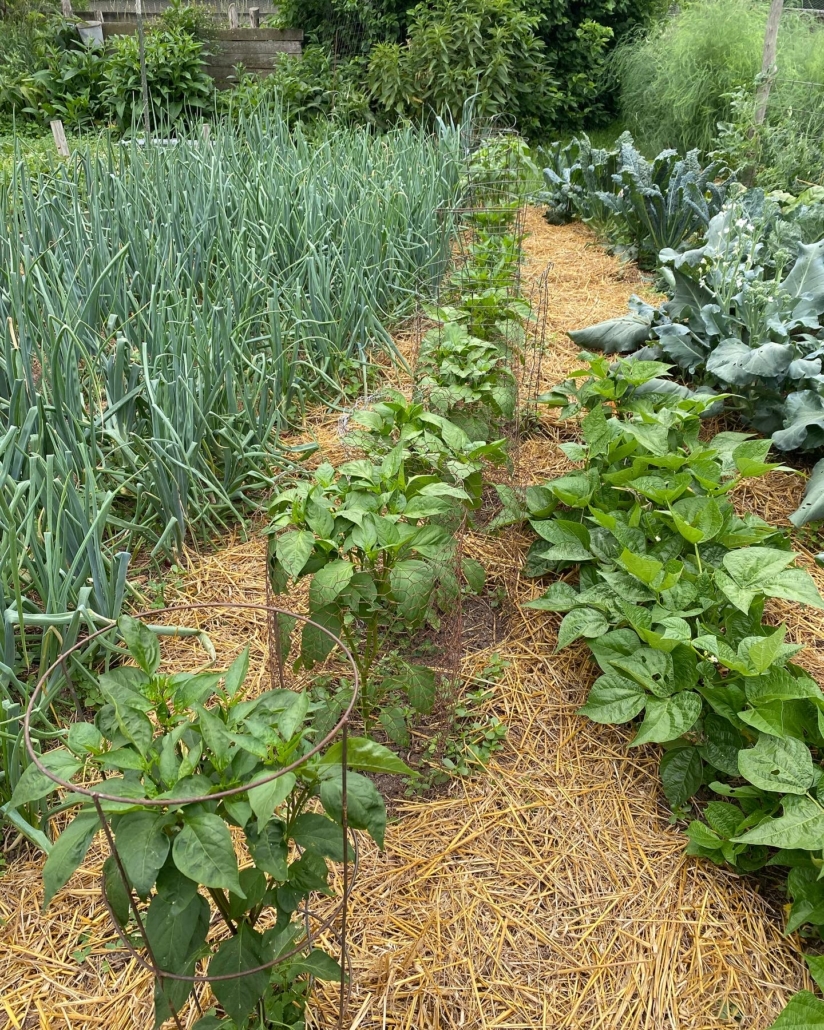
Title: Community Led Conservation Through Composting, Natural Pest Control, and Water Conservation Practices.
Abstract: This project will provide workshops and demonstrations on the environmental benefits of home composting and watering conservation. This project, which will be extended to the 6,557 residents of Thurston County, Nebraska, and will be conducted in Walthill, NE, in partnership with the Nebraska Indian Community College in Macy, NE. The project aims to address the unique challenges of home gardeners in this region by offering resources to increase the conservation practices of composting, natural pest control, and limited water waste.
Title: Community Learning Circles and Meet-the-Producer Series
Abstract: This project will coordinate and host two educational series (totaling 15 unique workshops and events) for the public to participate in, which will be co-led by partners and producers in the Omaha region. The two series are designed to revitalize sustainable land practices, elevate cultural food knowledge, reduce food waste, strengthen local food networks, and empower producers through education, connection, and community engagement. Overall, this project aims to feature seven Community Learning Circles workshops and eight Meet-the-Producer events, engaging over 300 participants and 15 community partners. This project aligns closely with COLEARN’s values including cultural preservation, improving resilience, and relationship-based learning. By leveraging this network of partners we will build a more connected and resilient regional food network in Nebraska.
Title: Harvesting Knowledge: Youth and Elders strengthening Tribal Food Systems
Abstract: Harvesting Knowledge will provide eight hands-on agricultural education workshops for Omaha Tribal members, women landowners, and Native agricultural producers. Six workshops will focus on food preservation techniques such as canning and drying, while two will train participants in extending the growing season using high tunnel production. The workshops will emphasize intergenerational learning, pairing youth with elders to pass on traditional agricultural knowledge, strengthening food sovereignty and climate resilience in the Omaha Tribal community.
Title: Tatanka Oyate Wayacin: To Live Life Like a Buffalo
Abstract: This Project will support a two-day traditional Oceti Sakowin Learning camp centered around a cultural bison harvest conducted with the Santee Sioux Tribe of Nebraska. The purpose is to reconnect Indigenous youth from the urban Lincoln community with their cultural teachings, food systems, ancestral identity, and land-based practices. This program will help strengthen generational knowledge pathways and revitalize traditional lifeways of the Oceti Sakowin people.
Adaptation Planning
Title: Resilience Kits for Nebraska Farmers
Abstract: This project will provide 20 kits to farmers and landowners in our current programs and communities we work in across the state of Nebraska. These kits will provide essential tools for addressing resource concerns related to farming and conservation in the face of extreme weather. Each kit will be put together and hand-selected by staff based on the needs of each individual applicant. Participants who receive the kits will fill out an application and questionnaire selecting which tools would most benefit their land and production situation. Kits will include tools such as soil thermometers, soil moisture sensor, materials for DIY soil infiltration testing, Midwest Labs soil test materials, cover crop seeds, native pollinator mix seeds, hand-broadcaster, drip irrigation materials, weather stations, row covers, stainless steel season-extension hoops, broadforks, rain barrels and more.
Title: Driftless Area Watershed Community Exchange
Abstract: Northeast Iowa RC&D, in collaboration with IIHR—Hydroscience and Engineering, Trout Unlimited, and the Coon Creek Watershed Council—home of the nation’s first watershed demonstration project in southwest Wisconsin—is proposing a regional networking and knowledge exchange initiative focused on watershed community building in the Driftless Area. This effort aims to share expertise, strengthen community connections, and address the environmental impacts of agricultural and land-use practices across the landscape and downstream. This grant supported travel costs for 12 Iowa Professionals and farmers associated with outreach and education – hotel, travel and transportation to the September Event.